
A kitchen is one of the most important areas of any home because it combines functionality, convenience, and everyday family activities. When planning a new kitchen or renovating an existing one, choosing the right design is essential for creating a comfortable and organised cooking environment. Two popular options homeowners often consider are modular kitchens and traditional kitchens.
Both designs offer different advantages depending on the available space, budget, storage requirements, and personal preferences. While modular kitchens focus on modern layouts, customised cabinets, and efficient storage solutions, traditional kitchens generally involve conventional construction methods and fixed storage arrangements. Understanding the differences between these options can help homeowners select a kitchen that suits their lifestyle and long-term requirements.
1. Understanding Modular Kitchens and Traditional Kitchens
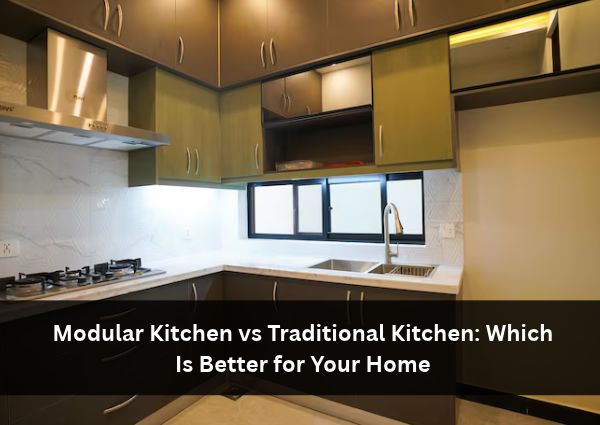
A modular kitchen is designed using pre-manufactured cabinet units or modules that are assembled and installed according to the available kitchen space. These modules include base cabinets, wall cabinets, drawers, pantry units, and specialised storage accessories. They are available in different materials, finishes, colours, and configurations.
One of the biggest advantages of modular kitchens is their flexibility. Homeowners can customise cabinet arrangements, choose suitable countertop materials, and incorporate modern accessories such as pull-out baskets, corner units, soft-close drawers, and built-in appliance spaces. These features help maximise storage and improve everyday convenience.
Traditional kitchens, on the other hand, are generally constructed directly at the site using materials such as brickwork, cement, tiles, and locally fabricated cabinets. Their layout is usually fixed, with storage shelves and countertops built according to the available dimensions.
Traditional kitchen designs are often preferred by homeowners who appreciate conventional layouts, solid construction, and familiar materials. They can also be customised according to individual requirements, although making major changes after construction may require additional work.
Both options can create practical cooking spaces, but their construction methods, installation processes, and design flexibility differ considerably.
2. Comparing Cost, Durability, Maintenance, and Functionality
Budget is an important consideration when selecting between modular and traditional kitchens. Modular kitchens may involve a higher initial investment depending on the materials, finishes, accessories, and hardware selected. However, their organised manufacturing and installation process can make budgeting and planning more convenient.
Traditional kitchens may offer a more economical option when locally available materials and standard construction methods are used. However, the final cost depends on labour, material quality, countertop selection, and finishing requirements.
Durability is another important factor. Modular kitchens manufactured using quality materials such as marine-grade plywood, suitable moisture-resistant boards, and reliable hardware can provide long-term performance when properly maintained. Traditional kitchens built with good-quality masonry and suitable finishes can also be highly durable.
Maintenance requirements vary according to the materials used. Modular cabinets may require occasional hardware adjustments, cleaning, and protection from excessive moisture. Traditional kitchens may require repairs to tiles, plaster, shelves, or cabinet finishes over time.
Functionality is where modular kitchens often provide greater convenience. Features such as:
- Pull-out drawers for organised utensil storage.
- Corner units for accessing difficult spaces.
- Tall pantry cabinets for groceries.
- Soft-close hinges and drawer systems.
- Dedicated sections for appliances and kitchen accessories.
These solutions help improve accessibility and make everyday cooking more efficient. Traditional kitchens can also include practical storage arrangements, but achieving the same level of flexibility may require additional customisation.
3. Design Flexibility and Space Utilisation
Modern homeowners increasingly prefer kitchens that combine attractive appearances with efficient space planning. Modular kitchens offer several layout options, including L-shaped, U-shaped, parallel, straight, and island kitchens. These configurations can be selected according to the room dimensions and cooking requirements.
Their modular structure also makes it easier to replace individual cabinet units, update finishes, or modify storage arrangements without rebuilding the entire kitchen. This flexibility is particularly useful for homeowners who may want to renovate their interiors in the future.
Traditional kitchens generally follow fixed layouts based on the original construction. Although their appearance can be customised using different tiles, countertops, cabinet finishes, and colours, significant layout changes may involve additional construction work.
Space utilisation is another important difference. Modular kitchens are designed to use available vertical and horizontal space efficiently. Tall storage units, overhead cabinets, corner accessories, and built-in appliances can help create a more organised cooking area, particularly in compact apartments.
Traditional kitchens can also be designed for spacious storage, but their effectiveness depends on the planning and construction quality.
The best option ultimately depends on the homeowner’s priorities. Those seeking modern aesthetics, flexible storage, and convenient maintenance may prefer modular kitchens. Homeowners who prioritise conventional construction, locally available materials, and simpler layouts may find traditional kitchens suitable.
Both modular and traditional kitchens can be excellent choices when designed with proper planning and quality materials. Before making a decision, homeowners should consider their budget, available space, storage needs, maintenance expectations, and preferred interior style.
Purple Studio provides the best interior services regarding this, helping homeowners design functional, stylish, and well-organised kitchens according to their individual requirements. With thoughtful space planning, customised designs, suitable materials, and modern finishing solutions, Purple Studio helps create kitchens that combine everyday convenience with timeless appeal.